
Posts done in 90 seconds. Then back to the showroom.
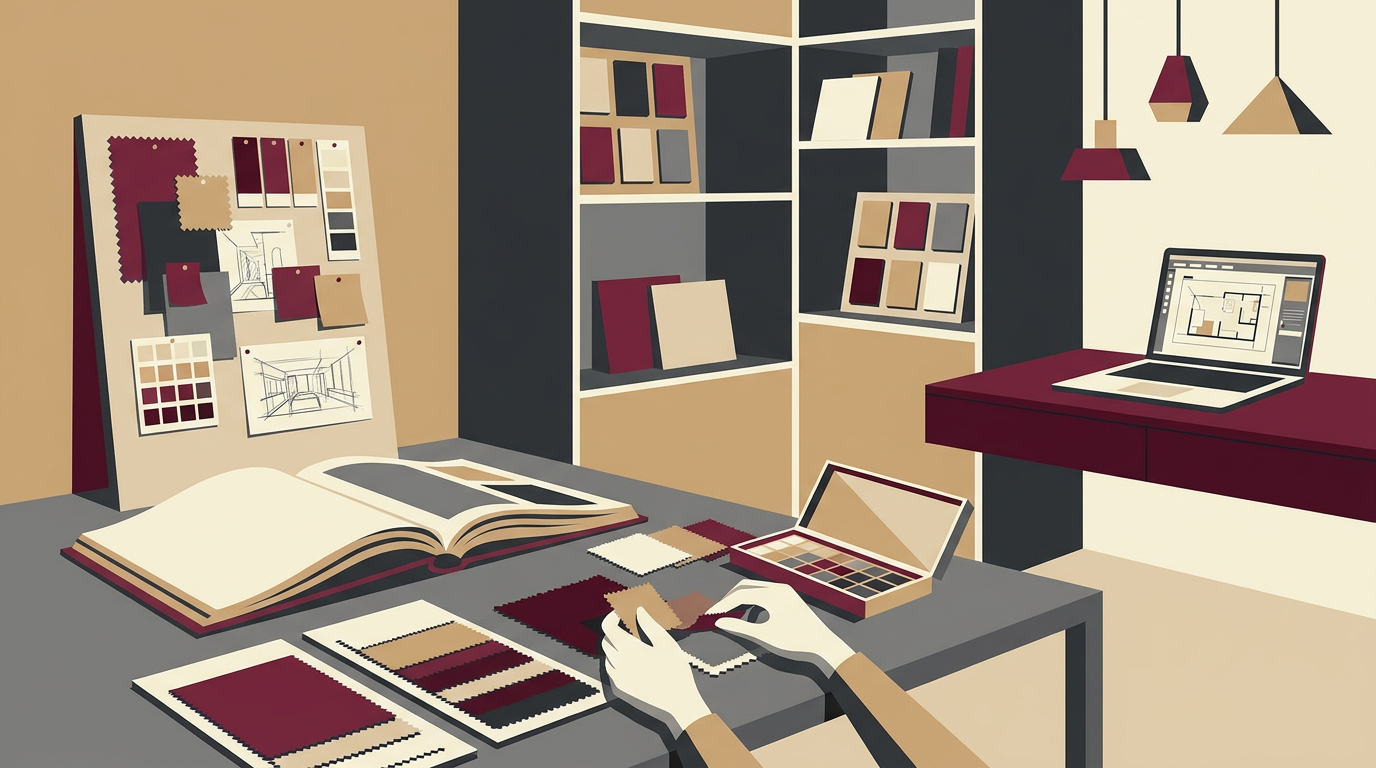
The samples are laid out. The fabric books are open. A client is due in twenty minutes to walk the showroom and decide on a scheme that will live in their home for years.
That is the work. Not staring at a blank caption while the mood board waits.
Most interior designers do not have a marketing problem. They have a consistency problem. The rooms are beautiful. The process is careful. The feeds go quiet because posting is the job that never quite fits between site visits, supplier calls, and the next walkthrough.
PostMaid is built for that gap.
From idea to published while the kettle boils
You give PostMaid one idea. It writes platform-native copy for LinkedIn, Facebook, Instagram, TikTok, and Google Business Profile at the same time, plus an email, and a matching hero image. The loop from idea to ready-to-publish is under 90 seconds when you use photos you already have. Average time to review-ready content is 32 seconds.
That is not a dashboard marathon. It is the marketing equivalent of finishing a sample board before the client arrives.
Point PostMaid at your website. It reads the live site, including JavaScript-rendered pages, and builds a brand profile: tone, audience, style, creative direction. Then Arkie, the built-in creative director, opens with five specific ideas drawn from your actual studio, not leftover generic tips. You pick one, riff, or type your own focus. Arkie never repeats a premise it has already shown you.
While you choose an image, the copy is already done.
Images that belong to the room
For an interior designer, the picture and the words have to be the same story. A linen sofa cannot sit under copy about something else. PostMaid keeps that lock: one idea, one visual world, every channel.
You can use Google Imagen for a photorealistic or animated hero, a licensed photograph from the Pexels library, or your own showroom and project photos uploaded as permanent brand assets. Overlay cards can carry a headline and a stat if you want a finished graphic without opening another app.
Review. Tweak a sentence if it is not quite your voice. Hit Post, or tap the sparkle and let Claude Opus suggest a publish time with a one-line reason. Production-grade scheduling retries failed publishes, notifies you, and bumps clashes.
Then you close the laptop.
Where the time actually goes
Time won is not a slogan. It is twenty extra minutes on the floor with a client who is choosing between two stones. It is walking the lighting again instead of drafting hashtags in the car. It is mentoring a junior on how you talk about proportion, not teaching them how to format Instagram.
It can also be quieter money: fewer stalled projects because you were present, more enquiries from people who found you on Google Business Profile instead of only the followers who already know the studio. Daily, Google-ready posts with images you can copy to the profile in one click matter for local search. Most small businesses post there once or twice a month, or never. People who search locally often visit within 24 hours.
PostMaid is not trying to replace the designer’s eye. Content may still need a light edit. It removes the hardest part: starting from nothing, six times over, for six different platforms.
Is this the right tool for a design studio?
It is a strong fit when marketing is not the main job but visibility still matters, and when you already create some content but cannot stay consistent. It is not meant to replace studios whose product is the content itself.
Plans are Single brand A$35/mo (US$25/mo), Pro for four brands A$85/mo (US$45/mo), and Agency A$150/mo (US$99/mo). Seven-day free trial on all plans. No credit card.
The feeds can be done before the client’s hand is on the showroom door. The walkthrough is the part only you can do.
Ready to take the next step?
Learn more about how we can help you.